At a glance
Give Barcelona three distinct days: the Gothic Quarter and waterfront, a booked Sagrada Família visit with a manageable modernist walk, then Park Güell and Gràcia. Reserve the two major Gaudí attractions before arranging the rest. Keep the hillside park separate from a packed city-centre afternoon. This route combines architecture and neighbourhood time, with enough space to adapt to heat, rain and ticket availability.
Plan around the visits you most want
Barcelona has several famous interiors, but booking all of them does not automatically create a better trip. Select Sagrada Família if the basilica is your priority, then decide whether a house interior or Park Güell provides the most useful second experience. The official tourism portal highlights Gaudí's wider work, the Gothic Quarter and the city's maritime side. These are different ways to see Barcelona, not competing entries in a checklist.
Our three-day order keeps each day in a manageable cluster. You can reverse the days when tickets or weather require it, while preserving the distinction between the older centre, the modernist streets and the hillside park. It assumes three full days after arrival. If your visit is shorter, remove an optional house tour or waterfront extension rather than creating a rush between two compulsory entry times.
| Day | Main area | Main experience | Important check |
|---|---|---|---|
| One | Gothic Quarter and waterfront | Historic streets and a relaxed coastal section | Opening arrangements for any chosen interior |
| Two | Sagrada Família and Passeig de Gràcia | Basilica and modernist architecture | Entry time, dress rules and selected ticket |
| Three | Park Güell and Gràcia | Park visit and neighbourhood lunch | Correct entrance and arrival within the ticket window |
Day one: begin with the older city
Start around the Gothic Quarter, where Barcelona's tourism portal describes layers of Roman and medieval heritage. Pick a clear starting square, a main architectural stop and a sensible endpoint for lunch. The attraction of this morning is the changing street pattern and the detail between larger sights. An unstructured walk is easier to enjoy when it has a loose direction and does not need to reach five interiors before midday.
Choose one church or museum interior according to your interests, and check its actual access conditions. A historic district contains homes, businesses and religious buildings as well as visitor attractions. Leave doorways open, avoid blocking narrow passages for photographs and keep conversations considerate. Do not describe a residential street as an undiscovered secret simply because it appears quiet during your visit.
Take lunch before extending towards the water. This avoids deciding the next part while hungry and tired. If you want another old-town city break to compare, our Ljubljana walking guide offers a shorter bridge-and-square route. Barcelona has a different scale and transport pattern, so use the comparison to choose your preferred pace rather than to estimate identical walking times.
Leave room for the waterfront
Make the waterfront a separate afternoon choice. A promenade walk, time on the beach and a harbour activity each call for different preparation. Choose one that fits the season, conditions and your group. A coastal setting is not a guarantee of swimming conditions, and a beautiful afternoon photograph is not a reason to leave a booked indoor visit halfway through the day.
Keep your belongings attended and bring only what you need for the outing. Decide where you will finish and how you will return before settling down for a long break. If you are mainly interested in architecture, shorten the waterfront section and retain energy for the next day. If the coast is a major reason for your trip, give it more time by dropping an optional interior rather than squeezing both into the same hour.
An evening meal does not need to be another attraction. Compare the displayed menu and booking terms, then choose somewhere that suits the route back to your accommodation. You can enjoy a neighbourhood dinner without seeking a famous table or crossing the city twice. Leaving the evening flexible also gives you useful recovery time if travel or hot weather made the first full day more demanding than expected.
Day two: let Sagrada Família set the timetable
Book the basilica for the day and time you can comfortably reach. Read the selected ticket's inclusions: a guided visit, an audio option and tower access are different products. Do not assume that every admission includes a tower. Allow for entry procedures and check how to reach the entrance stated in your confirmation, rather than navigating to whichever façade appears most often in photographs.
The basilica's official conditions require appropriate clothing. The checked dress rules include covered shoulders and trousers or skirts reaching at least mid-thigh, with no swimwear or transparent clothing. Plan this before leaving your accommodation, especially if you have combined the day with time by the sea. Carrying something suitable for the visit is easier than trying to solve an entry issue at the gate.
After the basilica, take a proper break before continuing with modernist architecture. Passeig de Gràcia offers a different setting from the older centre, and you can appreciate building exteriors without booking every house. Choose Casa Batlló or Casa Milà only if an interior visit adds something you personally want. Check the separate operator's time, product and access arrangements before attaching it to the afternoon.
Decide how much architecture is enough
A house tour and a basilica visit can create a rich day, but they should not compete for the same energy. Our suggestion is one major booked interior plus an unhurried architectural walk. If you choose a second interior, reduce the walk and leave a wide gap between reservations. Differentiate viewing an exterior from entering a building, so the itinerary remains honest about what has actually been included.
Travellers comparing cultural city breaks can look at our Rome three-day itinerary, where ancient sites and Vatican collections are also separated into substantial visits. That approach is useful here: the most famous buildings deserve more than a short arrival-and-departure slot. Leave time to sit down, look again at the architecture and discuss what interested you, instead of moving immediately to the next reservation.
Day three: Park Güell and a Gràcia afternoon
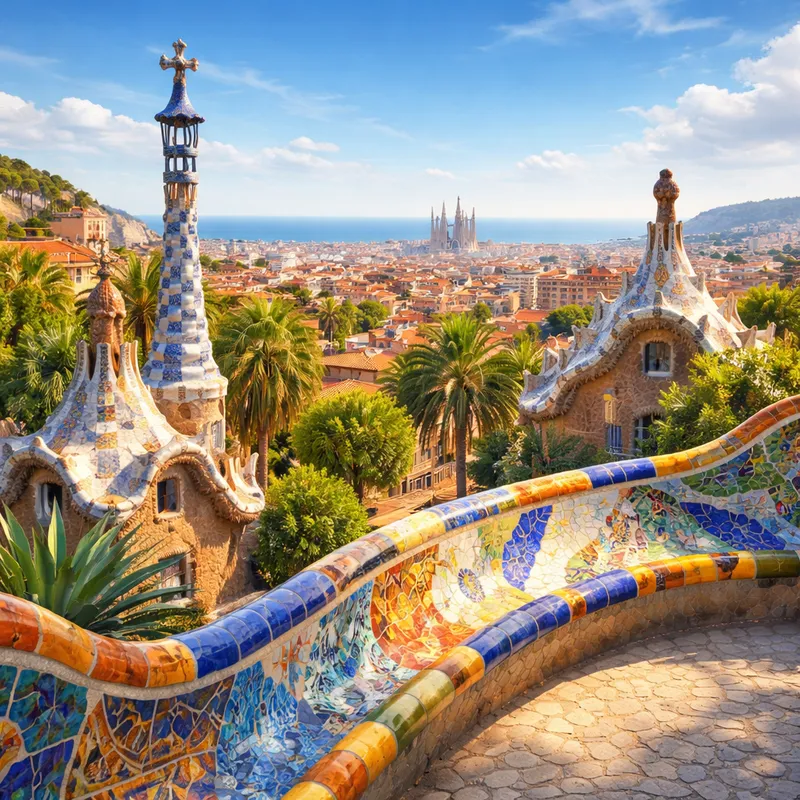
Park Güell deserves a morning or afternoon block of its own. The official visitor rules state that tickets permit entry within thirty minutes after the booked start, and that leaving the park does not allow re-entry on the same validated ticket. Plan the approach carefully and check which entrance is closest to your arrival route. A map pin inside the park is not a substitute for reaching the correct access point.
Book in advance when the park matters to your trip. The official FAQ recommends online booking to secure availability and describes limited visitor capacity. Check the chosen date, names and ticket conditions before paying. Allow time for slopes and for moving through the site rather than treating it as a single viewpoint. Do not climb or lean on protected architectural elements to obtain a better photograph.
After the park, choose a manageable section of Gràcia for lunch and a neighbourhood walk. Avoid assuming that every descent will be equally easy for every traveller; check the route and take transport if needed. The advantage of this pairing is a less tightly booked afternoon. If the park visit takes longer than expected, you can shorten the street walk without missing another paid time slot.
Accommodation and costs that match your route
Choose accommodation after comparing the journeys to all three areas. A property in the old city may appeal for evenings, while a location near useful metro connections can simplify the Gaudí days. Check the actual door-to-stop walk, lift access and luggage arrangements. A straight-line distance to Sagrada Família does not describe the whole trip, and a room with a beautiful balcony may still require several flights of stairs.
Budget for the selected admissions, local transport, meals and optional extras separately. Compare a city card against your actual shortlist, including reservation requirements and exclusions. For rain, keep a chosen interior as the main activity and shorten the exposed walk. For heat, avoid adding demanding climbs just to complete the list. Browse our travel planning guides for more ways to structure short stays around a realistic number of priorities.
Frequently asked questions
Is three days enough for a first Barcelona visit?
Three full days give you a useful introduction to the older city, Gaudí architecture and the waterfront or a neighbourhood afternoon. They do not cover every museum and famous building interior. Select the two experiences that matter most, book those first and keep the remaining walks flexible. Partial arrival and departure days require a shorter plan.
Do I need to reserve Park Güell?
The official park recommends online booking in advance to secure availability. Tickets have a selected entry time, with a thirty-minute arrival window after that time under the checked rules. Confirm the current conditions before your visit and reach the appropriate entrance early enough. Once you leave after ticket validation, re-entry is not allowed on that ticket.
What should I wear to Sagrada Família?
Follow the basilica's current dress code. The conditions checked for this guide include covered shoulders, trousers or skirts to at least mid-thigh, and no swimwear or transparent clothing. Check the full rules with your booking, particularly if your day also includes the beach. A ticket does not remove the need to comply with entry conditions.
Should I combine Sagrada Família and Park Güell in one day?
You can with suitable bookings and transfers, but this itinerary separates them to leave time for each and to reduce deadline pressure. The basilica day pairs naturally with a selective modernist walk; the park day leaves an afternoon for Gràcia. If combining them, allow generous travel time and remove additional interiors rather than filling every gap.
Sources and checks
- Barcelona Tourism: Gothic Quarter and city areasChecked: 7 October 2026
- Barcelona Tourism: Gaudí beyond Sagrada FamíliaChecked: 7 October 2026
- Sagrada Família: visitor conditions and dress codeChecked: 7 October 2026
- Park Güell: access rules and entry windowChecked: 7 October 2026
- Park Güell: booking FAQsChecked: 7 October 2026
Itineraries are editorial suggestions for independent visits. Check current prices, opening hours and trail conditions with official providers.